博文

目前显示的是标签为“steelstructure”的博文

What is the difference between a girder, rafter, and purlin in steel structures?

图片
  In steel structures , girders, rafters, and purlins are all structural components that play different roles in supporting the building's load and providing stability. Here's a breakdown of each: 1. Girder:     - A girder is a large horizontal beam that supports other beams or loads across an open space, such as a roof or floor.     - Girders are typically placed perpendicular to the beams they support and are designed to carry heavy loads over long spans.     - In steel construction, girders are often used in building frames and bridges to distribute loads from the beams to the columns or supports. 2. Rafter:     - A rafter is a sloped structural member that supports the roof covering and transfers its load to the walls or other supporting elements.     - Rafters are commonly used in roof framing to provide structural support and to create the pitched shape of the roof.     - In steel constr...

What type of steel connection is the articulated connection suitable for?

图片
  articulated connection The articulated connection is mainly used for the connection of beams and columns in steel structures , especially where it is necessary to allow the two structural members to rotate relative to each other within a certain range. This type of connection is usually used for flexible connections, in contrast to rigid and semi-rigid connections. In an articulated connection, the connecting nodes are not subjected to significant deformation of the connection angle, thus maintaining the overall stability and resistance of the structure. Articulated structures usually use double angles, end plates, single shear plates and double shear plates as connectors. In steel structures, it is usually used as a connection structure connecting primary and secondary beams, and can also be applied in the structural splicing of inclined beams. For example, double angles can be welded on both sides of the web of the secondary beam, and at the same time connected with the main be...

What types of steel column footings are available?

图片
The footing design of steel columns can be of different types depending on the specific needs and structural requirements. Below are some common types of steel column footings: steel column footings Enlarged Base: The Enlarged Base improves stability by adding some enlargement to the bottom of the column. This design is often used where there is a need for greater horizontal loads or to reduce base stresses.   Pad Base: A solid stone or concrete block is placed at the base of the column to provide better support and distribute the load. Bolted Base: A bolted foot connects the post to the base using bolts. This design facilitates installation and removal of the post, and makes it easier to maintain. Welded Base: A welded base connects the column to the base through welding. This design is often used for structures requiring higher flexural and torsional stiffness. Fixed Base: The Fixed Base improves resistance to lateral displacement by securing the bottom of the column to the found...

How to choose steel structure fireproof coating?

图片
  When selecting fireproofing coatings, the following points should be noted? fireproof coating (1) Don't use the finish type fireproof coating for steel structures, the finish type fireproof coating is the fire retardant coating to protect the combustible substrate such as wood structure, and the thin coating film can't reach the purpose of improving the fire resistance limit of steel structure. (2) Thin-coated steel structure intumescent fireproof coating should not be used to protect steel structures with a fire resistance limit above 2.5h. Thin-coated intumescent fire-resistant coating is not too long fire-resistant limit is determined by its own raw materials and fire prevention principles. This type of coating contains more organic components, coating at high temperatures will cause physical and chemical changes, and the formation of carbonaceous bubble film can play a role in heat insulation. Expanded bubble film strength is limited, easy to crack, and fall off, charcoal...

Stability analysis of steel structures

图片
  At present, there are first-order elastic analysis methods (i.e., traditional calculated length method), second-order P-∆ elastic analysis methods, and direct analysis and design methods (also second-order analysis method) for the stability analysis of steel structures . These three methods appeared successively with the deepening of the theoretical study of steel structure and the development of engineering practice. Before introducing these three stability analysis methods, it is necessary to understand that the stability analysis of steel structure has the following characteristics: (1) the effect of structural deformation on structural internal force cannot be neglected; (2) the stability analysis is nonlinear (geometric nonlinear), and the principle of load superposition cannot be used; (3) the distinction between static and super-static structure has no significance in the stability analysis.   1. First-order elastic analysis method, which can also be called the length...

What is weld margin height?

图片
  The weld height is the height of that portion of the metal on the surface of the weld above the line of the two toes. In layman's terms, the residual height refers to the portion of the weld metal that bulges out of the surface of the base metal or the portion of the molten metal that is above the line of connection at the end of the fillet weld (i.e., the toe).   The residual height increases the cross-sectional area and strength of the weld, which can increase the sensitivity of X-ray radiography, but it is easy to cause stress concentration at the weld toe, so the residual height should not be lower than the base material, but also not too high. According to national standards, the residual height of manual electric arc welding is 0 mm ~ 3 mm, and the residual height of submerged arc welding is 0 mm ~ 4 mm.   In practice, the size and shape of the weld residual height will have an effect on the performance of the welded joint, so it is very important to control the w...

How to choose the right steel structure material?

图片
  How to choose the right steel structure material ? Choosing the right material for your steel structure is a comprehensive process that requires consideration of several factors. Here are some suggestions: Understand the performance of the material: different steel structure materials have different properties, such as strength, stiffness, toughness, corrosion resistance, fire resistance, and so on. When choosing materials, you need to select materials with performance that meets the requirements according to the actual needs and use environment. Consider load and span: The load and span of steel structure are important factors affecting material selection. For large span and heavy load steel structures, it is necessary to choose high strength and high stiffness materials to ensure the safety and stability of the structure. Environmental factors: Environmental factors also have an impact on material selection. For example, in humid and corrosive environments, materials with goo...

What types of welding electrodes are typically used in steel construction?

图片
There are various types of welding electrodes commonly used in the welding of steel structures and the choice depends on the specific application and requirements.  The following are some of the types of welding electrodes commonly used in structural steel welding:   General purpose carbon steel electrodes: Used for welding general carbon steel structures, these electrodes are suitable for most construction welding tasks.   Low alloy electrodes: for welding low alloy steel structures to improve the strength and corrosion resistance of welded joints.   Stainless steel electrodes: Used for welding stainless steel structures to ensure that the weld has corrosion and oxidation resistance.   Hardfacing electrodes: Used for wear and impact-resistant applications such as excavator blades, mining equipment, etc.   Weathering steel electrodes: For welding weathering steel, is often used in outdoor structures such as bridges and buildings.   High Strength Weld...

Unveiling the Strengths of Steel Structures

图片
  Steel structures stand as the backbone of modern engineering and architecture, offering unparalleled advantages that have shaped the skylines of our cities. In this article, we will delve into the myriad strengths that make steel a premier choice in construction projects worldwide.   1. Exceptional Strength and Durability: At the core of steel's appeal is its exceptional strength. Steel structures boast a high tensile strength, making them capable of withstanding heavy loads and adverse environmental conditions. This inherent robustness ensures longevity, contributing to structures that can endure for generations. 2. Versatility in Design: Steel's versatility extends to its malleability, allowing architects and engineers to bring their most ambitious designs to life. The material's adaptability facilitates the creation of complex and aesthetically pleasing structures, from towering skyscrapers to intricate bridges. 3. Speed of Construction: One of the standout advantages ...

What are the points to look for in a steel structure space frame in the Middle East?

图片
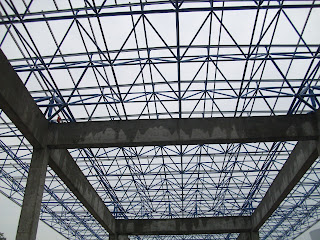
  space frame roof Steel space frames used in the Middle East may have certain characteristics influenced by various factors including climate, architectural preferences, and engineering standards. Here are some potential characteristics that may be associated with steel space frames in the Middle East:   Heat and Sun Exposure: Given the high temperatures and intense sunlight in many parts of the Middle East, steel space frames may need to be designed and coated to withstand prolonged exposure to these conditions. Sand and Dust Resistance: In desert regions, where sand and dust storms can occur, steel structures may need to be designed to prevent the accumulation of sand and dust, which can lead to corrosion over time. Architectural Aesthetics: Middle Eastern architecture often incorporates intricate and decorative designs. Steel space frames in this region may be designed to blend with or complement the local architectural styles. Seismic Considerations: Some parts of the Mi...

Processing of colour steel plate

  Colour steel plate is a kind of building material made of thin steel plate coated with colour coating or galvanized, which is used for building roofs, walls and so on. The processing of colour steel sheet usually includes the following steps:   Material Preparation: Prepare the raw material for the colour steel sheet, which is usually a pre-treated thin steel sheet, either colour coated or galvanised.   Unwinding: The curled rolls of raw material are flattened for subsequent cutting and processing.   Cutting: According to the design requirements, the cutting equipment is used to cut the colour steel plate to get the required size of the plate.   Forming: The colour steel plate can be processed in different shapes, such as wave shape, tile shape and so on, by forming machine. The forming machine presses the plate into the required shape according to the preset mould.   Punching: Use punching machine to make holes for the colour steel plate at the required...

What are the advantages of steel over traditional concrete?

图片
  steel warehouse Steel structures offer several advantages over traditional concrete structures that cover a wide range of areas, including speed of construction, flexibility, sustainability, and more. Here are some common advantages of steel construction:   Lightweight and High Strength: Steel is a lightweight and strong building material. Compared to concrete, the use of steel reduces the dead weight of the building, which in turn reduces the load on the foundation and lowers the overall weight of the building.   Fast construction: Steel structures can be prefabricated in a factory and then simply assembled on site. In contrast, traditional concrete structures typically require more on-site pouring and maintenance time. As a result, steel structures are often faster to construct, helping to shorten project duration.   Design Flexibility: Steel structures are strong and malleable and can support large spans and diverse building designs. This gives designers more f...